Late Bhagaban Chandra
The family has its origin at a village called Satgram in the Kalna sub-division of Burdwan district of West Bengal. It was then mid-nineteenth century. A boy of this family named Bhagaban Chandra, son of Subal Chandra, left home when he was in his teens. While the exact reason for his leaving home is not known it may be that his religious mind decided to visit Puri, where Lord Sri Chaitanya Dev spent his last breath. He traveled south and landed to place near Sauri in the district of Midnapore. He started staying over there with the help of local people and got married with a local lady.
But he did not like the place for long and with his wife he traveled further south and reached a place named Ghole in the Ramnagar subdivision of the Midnapore district. His educated mind soon influenced the local people, who requested him to stay back in the village and take care of the education of local boys. This coastal part of the district was very thinly populated then and was devoid of any school. Bhagaban Chandra was given a vast landed area to stay and he started teaching the local boys. After some time, he started a shop to sell salt and other grocery items. He was known of selling groceries at the same time while teaching his students. Gradually his business grew and he decided to deal in raw jute.
Bhagaban Chandra started collecting raw jute form the nearby areas and used to sail for Calcutta, where a number of jute mills were set up. By then he got married for the second time with a lady. He got three sons and two daughters from his first wife and only one son, named Kunja Behari, from his second wife. Kunja Behari got preliminary education from his father and was sent to the Midnapore town to sit in the entrance examination.
Kunja Behari was then about 18 years old studying in Midnapore town, when one day Bhagaban Chandra sailed for Calcutta carrying raw jute with a few fellow traders. The boats used to sail for Calcutta through Bay of Bengal. When the boat was in mid-sea Bhaganban Chandra got cholera, which in those days was considered to be deadly. The fellow traders got panicky of getting infected and dropped the unconscious body of Bhaganba Chandra in the sea to brace water-burial.
Late Kunja Behari
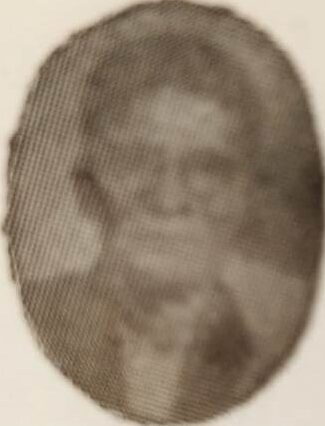
When the news of sudden demise of his father reached Kunja Behari, he was preparing for the Intermediate examination. He had to leave his studies and come to Ghole to look after his mother. Later on, he decided to discontinue studies and live at Ghole. He also started running the jute business of his father with the help of employees. But soon Kunja Behari realised that he was not good in business. Instead he had flare for education buy like his father he had to sail for Calcutta to sell raw jute.
One day when he was carrying jute in boat for Calcutta a fire broke out and the jute got badly damaged. He tried to sell the jute in a number of jute mills but no one agreed to buy them. It was dusk by then when Kunja Behari was thinking to sail back for home another jute mill came into vision. Kunja Behari thought to take last chance. Kunja Behari approached the staff saying that he had to return home immediately following an emergency. Since the office got closed the staff agreed to take delivery only at throwaway price. Kunja Behari agreed and went back to Ghole to discontinue the business.
Kunja Behari had a knack for property management and he bought a landmark 22 bigha land called “Rajapukur” at adjoining Islampur village.
Kunja Behari was also good in delivering justice to villagers and used to preside over village-courts. He became the president of Union Board and was a member of Jury in the district court.
Kunja Behari married Nirod Balla from a village. near Contai town. They got eight sons and four daughters.
Kunja Behari established the family Durga Puja in the year 1978 so that all the family members, the number of which had grown to more than hundred, can assemble during the Pujas. Kunja Behari died in the year 1980 at an age of about one hundred and is known as the founder of the ChaulKhola Das Paribar